“Many Homes Are Built, Few Are Built Optimally”
One of my mentors when I first started my design firm told me a statement that has proven to be one of the most true that I can recall. “There’s no perfect set of plans, there’s no perfect contractor, and there isn’t a perfect home”. Perfection is an unreasonable expectation that no one can live up to. But, I’ve created this list to show the top items/decisions that I see not only homeowners but, draftsmen, architects, and contractors make when designing New & Renovated Homes.
Top 8 Mistakes
- Changing Your Initial Design
- Neglecting Real Needs
- Maximizing Space & Storage
- Jack of All Trades, Master of None
- Too Minimalist
- Lighting
- Spending When You Should Save & Saving When You Should Spend
- Overriding Contractors & Designer / Architects’ Decision

1. Changing Your Initial Design
Now, Please do not get this point twisted, I am not encouraging you to find a floor plan from a spec home builder you like(or zillow, redfin, etc.) hand it to an architect and say “give me this”. There are too many variables to each family/couple/person to just take a cookie cutter approach to a custom home. But, what I encourage all of my clients to do is to take the first plan that they comb over that’s been adjusted according to their needs and if they say “You know what I really like this”…run with it & don’t look back. If your designer understands your needs, doesn’t see issues and you love it on first examination. STOP SECOND GUESSING! There is no plan on this earth that you can’t pick apart and more times than not the picking apart only leads to unnecessary and quickly devalued luxuries & frustration. I can’t tell you how many times I’ve heard “I wish we could have done it the way we originally planned.”
2. Neglecting Real Needs
When I first started in Construction/Design this was nowhere near a top 10 issue worth writing about but this is almost always a topic in today’s day and age, especially in sub 3,000 S.F. Homes. Pinterest, HGTV & Instagram are useful tools that allow every homeowner to come in more prepared and more informed than ever. As with all good things, it has a downside, every client has a design they saw that they “just have to have”. In a perfect world, we would have every element of our dream home but in reality you can’t have a 6 foot wide picture window in a 120 S.F> Kitchen. You can’t have a double sink and makeup vanity in a 7’x5′ Bathroom, do not give up your only space for a butlers pantry or your broom closet to try to have the “post-worthy” Kitchen or Bathroom. Function looks way better than that post in 2 years, I promise.
3. Maximizing Space & Storage
I’ll address storage first since it loosely ties in with #2. If you or your architect/designer hasn’t brought this up, you both came in under prepared (good news is you have an excuse, your’re learning as you go, your architect should not be). Where will your skis go, your tools or equipment, your understandably uncomfortable to explain garden gnome collection? This is your dream home and it’s not a dream when all of your children’s toys and your husbands tool set have found permanent residency on the middle of your dining table! Maximizing space and function starts in every room, sequentially take your home from left to right and see what is tasteful in each space and what becomes unnecessary, you’ll be shocked that your home can accommodate the wine bar, nook, or play room you never imagined would fit!

4. Jack of All Trades, Master of None
Each room and/or space has a specific function. Open concept plans have become a design staple, whether it’s a downtown studio or a large rural estate. Even with this, every space should have a designated use. There’s a saying “You don’t eat where you…” You know it but it is not only a good life habit but also a great design habit. The dining room or breakfast bar is for eating and the living room is for TV and Family Time. The bedroom is for sleeping and solace, and the laundry room is for folding clothes. Your home is designed with this in mind, utilize it accordingly.
5. Too Minimalist!
We’ve all seen the commercial, Claw-foot tubs, Claw-foot chairs/ottomans. An electrical outlet or Light switch?!? Forget about it!! Truth be told once you’re either a normal human being over 22 years old or have been kicked of Versailles, living this way isn’t functional or practical. #4 was all about not over using a space, but don’t neglect your daily activities and needs to be the show home. You will live here everyday, therefore you should design with the amenities and realistic items that sustain that.
6. Lighting
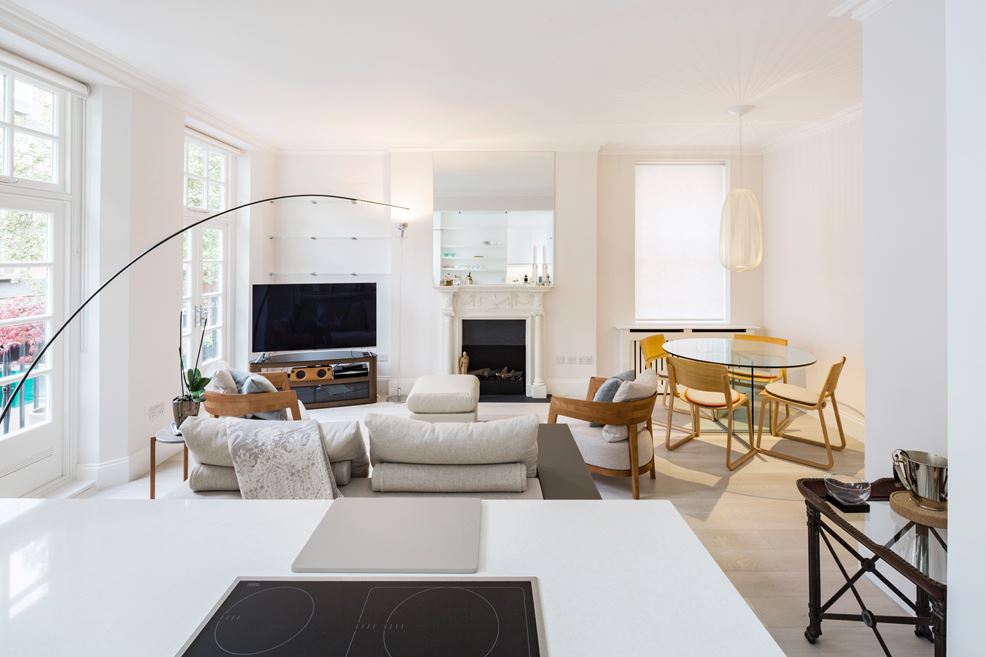
Why did that IKEA Kitchen Set and Magazine Backyard have the exact same layout and finishes but ours looks…Dated? Lighting! Homes that showcase the feel and give that airy, serene look you are looking for have more to do with lighting than you would imagine. It seems counter intuitive that natural light and artificial lighting go hand in hand but they do! More than likely 2-3 out of the four sides of any space don’t have a fenestration (window, french door, etc.) Therefore, 2-3 sides of the room are not going to be as well lit as the areas next to windows. Paint the ceiling and walls neutral colors, let the light fixtures even out that wonderful natural light and allow your decor, flooring and even cabinets to add darker, more vibrant pops of color. 9/10 times a well lit slightly smaller space will look 2x more spacious than a space that lacks proper lighting.
7. Spending When You Should Save & Saving When You Should Spend
We all are working on prioritizing so this is a very understandable mistake. This is why having good advisers in designers, contractors, family, and friends helps to alleviate this issue. Never (and I mean NEVER!) give up useful square footage for a finish that is a luxury. The mahogany cabinets and High end Quartz counter-tops are never worth losing a play room, dining area, or worst yet, your children sharing rooms unnecessarily (this has actually taken place on one of my jobs.) Doing mid grade finishes initially and replacing with high end 5-10 years down the line is so much more attainable than adding on a bedroom or master suite. That addition will cost you anywhere from $200-450/ S.F. and the counters and cabinets will run $60-100. Please, design responsibly!

8. Overriding your Designer & Contractors Advice
It will inevitably happen that at some point on the project your family will have a special need that the designer and/or contractor didn’t know about or take into account. But, if your project leads are strongly encouraging you not to make decisions that you just cannot agree with, one of two things are happening. 1) You hired someone who was not a good fit for your specific project or they are incompetent but in most cases 2) you’ve hopped yourself up on Love It or List It or watched one too many episodes of Property Brothers and are not taking into account all the variables of your specific home, family or locale. Whether it’s due to cost, function, or lack of space. If you’ve hired someone experienced, they’ve undoubtedly worked on/managed hundreds of projects. If they are doubling down, they have a reason and you should seriously consider their concerns.
Questions or Comments? Leave them below and let me hear your thoughts!!
 South Bay Design